
See how Psychiatry-Cloud powered by WRS Health supports successful transcranial magnetic stimulation (TMS) from the first patient touchpoint through final payment—with fewer handoffs, fewer delays, and better visibility across the program.
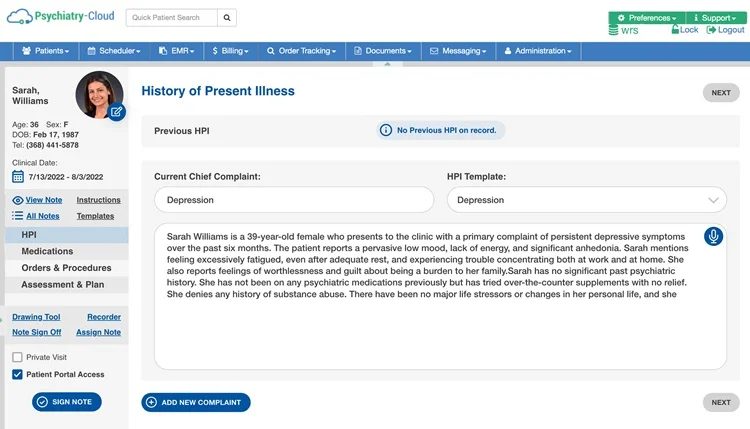
Most EHRs treat TMS like every other workflow. Psychiatry-Cloud powered by WRS Health approaches it like a unique service line.
Our psychiatry-specific EHR, AI-powered workflows, and business process outsourcing services work together to support transcranial magnetic stimulation at scale—across providers, locations, and payer mixes.
What Sets Us Apart
A successful TMS program starts with attracting the right patients. Psychiatry-Cloud powered by WRS Health connects marketing, intake, and scheduling so your TMS funnel is measurable, controlled, and sustainable.
What Makes It Work
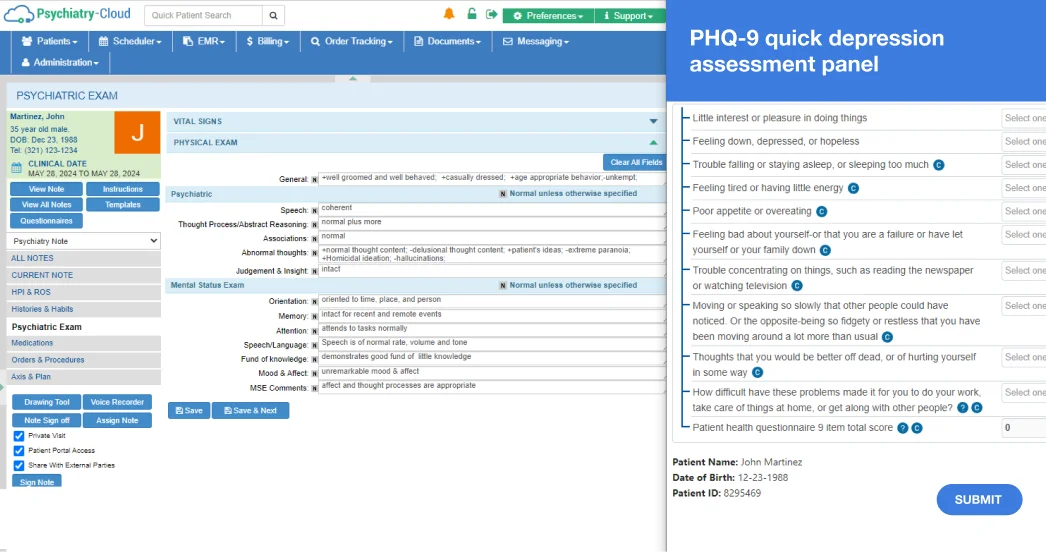
By the time a patient enters the office, the prep work is already done.
Clinical Support Includes:
With Psychiatry-Cloud, clinicians spend their time on treatment instead of reconstructing the visit from scratch.
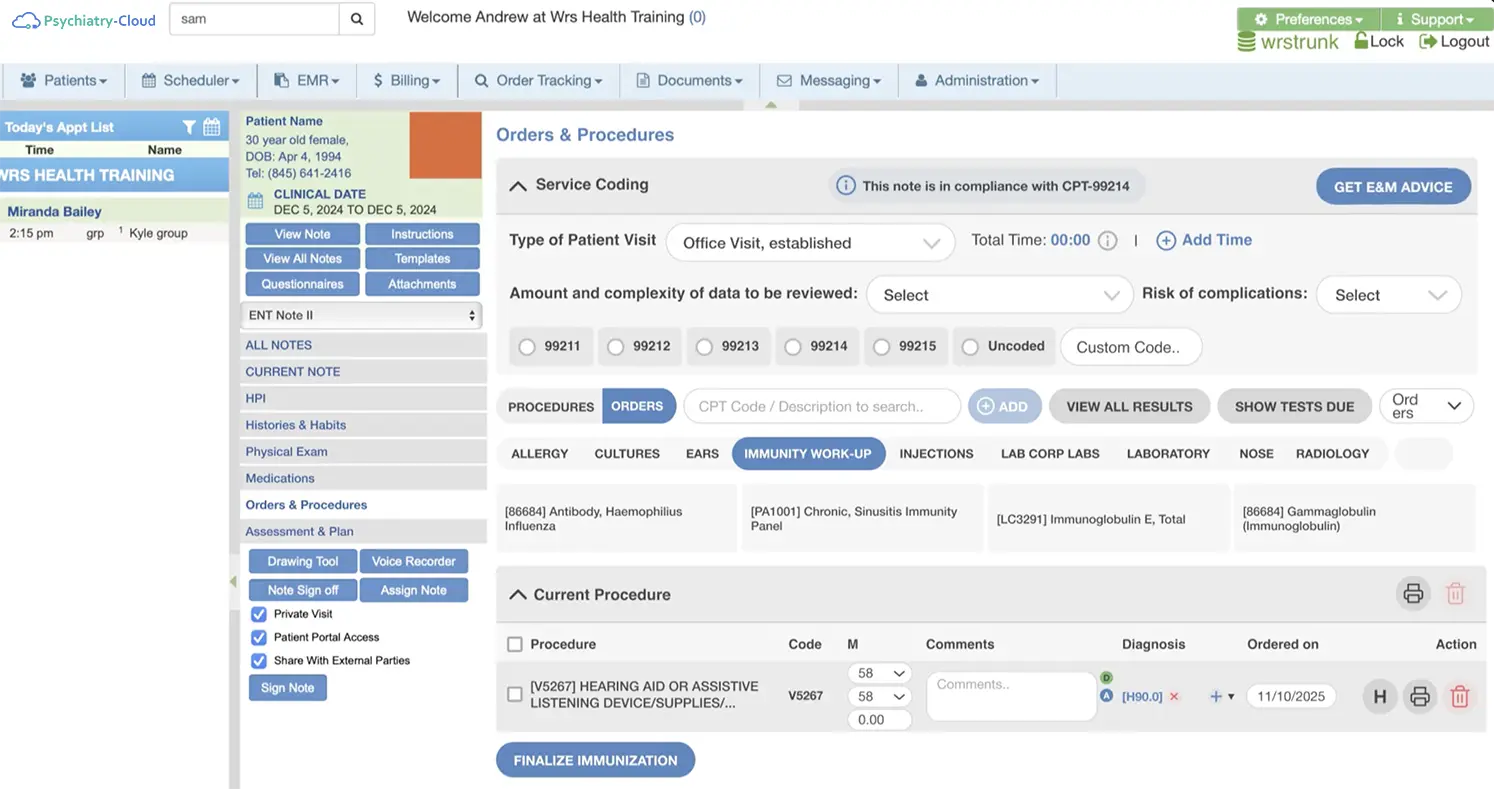
Psychiatry-Cloud powered by WRS Health keeps documentation, authorization, and billing connected from the start.
Billing and RCM Support
Built-In Visibility
Accessible, comprehensive insights make TMS easier to scale with confidence.


Growing your practice doesn’t always mean you have to go on a hiring spree. Our back-of-office services offer an affordable, reliable way to expand your organization while keeping resources optimized.
Available support
Let Psychiatry-Cloud powered by WRS Health take admin work off of your team’s plate and help save your practice’s resources for high-value investments.
Psychiatry-Cloud powered by WRS Health brings together EHR, automation, analytics, and services so TMS programs can operate with fewer gaps and better visibility.
A TMS-specific EHR is designed to support the complete TMS treatment lifecycle, including patient eligibility, prior authorizations, treatment scheduling, session tracking, clinical documentation, outcomes monitoring, and reimbursement workflows. This helps practices manage high-volume treatment schedules while maintaining clinical and billing accuracy.
Yes. Psychiatry-Cloud supports the complex scheduling demands of TMS programs, including recurring treatment appointments, provider coordination, patient reminders, and integrated workflow management. This helps practices maintain treatment adherence while reducing administrative burden.
Modifier requirements vary by payer — Psychiatry-Cloud’s billing engine automatically applies the correct modifier based on claim context and payer rules.
Common denial reasons include missing prior authorization, absent PHQ-9 documentation, incorrect modifier, or medical necessity not established. Psychiatry-Cloud’s denial management workflow flags each root cause before submission.
The platform supports structured assessments, treatment documentation, progress monitoring, and longitudinal patient records that allow providers to track symptom improvement and treatment response throughout a TMS course of care. This gives clinicians a clearer view of patient progress while supporting documentation and reporting requirements.
Still Have Questions? Contact Us